Aubree and Lukas stay connected through Lifelites’ inclusive technology, sharing precious moments together despite the challenges of her serious illness.
Felix
Felix
When 13-year-old Felix met the Princess of Wales at his local children’s hospice earlier this year, it was a moment his family will never forget. But behind the headlines is a deeper story: how assistive technology in a children’s hospice unlocked Felix’s world.
Living with a rare neurological condition, Felix was once thought to have little cognitive ability. Today, through eye-gaze technology and specialist sensory equipment provided by Lifelites, he plays music with his dad and communicates with intention. His story shows how assistive technology in children’s hospice care is life-changing for children with complex conditions and the families who love them.
A Special Meeting at Tŷ Hafan
When 13-year-old Felix Forbes met the Princess of Wales earlier this year, his courage and determination stole her heart.
Catherine was visiting Tŷ Hafan Children’s Hospice in South Wales, where she is the new Royal patron, following in Princess Diana’s footsteps.
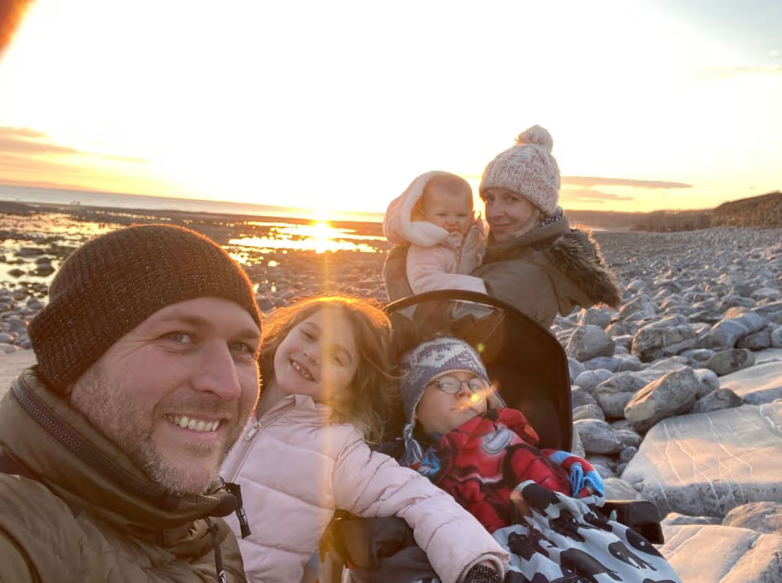
It was a dream come true for the Forbes family – mum Alex, 44, dad Dan, 43, and Felix, 13, Lottie, 10, and Maggie, five. Just a few months earlier Felix, who has rare neurological condition Miller-Dieker Syndrome, had been so unwell his family feared he would die.
One of 15,000 children in the UK and Ireland with a life-limiting condition, Felix benefits from Lifelites, tech that helps him connect with his family, learn and have fun.
Lifelites provide seriously ill and disabled children the chance to play, create and communicate, using the power of assistive and sensory technology. The charity makes the impossible possible for children with the most complex conditions.
Indeed, without Lifelites, Felix would have stayed “locked in his body”. His family would have no idea just how cognitively able he is. It’s opened up the world to him and given them the joy of connecting as a family.
For children with life-limiting conditions these special moments are often out of reach.
Not anymore.
And Felix is a wonderful example.
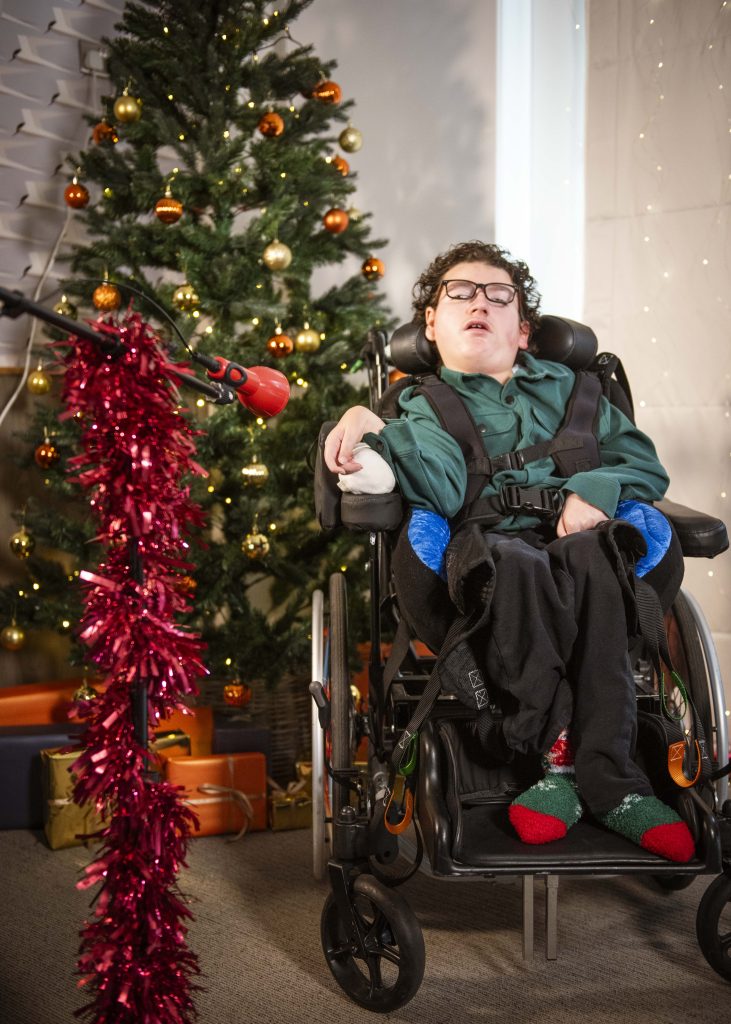
Living with Miller-Dieker Syndrome
Mum Alex has shared her story with the Mirror to helps readers understand how vital the technology is and how it has the power to unlock a child’s world.
“When pregnant with Felix I had a condition called polyhydramnios, which is too much amniotic fluid. A scan at 37 weeks found that the left ventricle in his brain was slightly bigger than it should be. When he was born, scans found two cysts on the back of his brain, though he was doing everything a newborn should otherwise. Then, two months later a further scan revealed the surface of his brain looked abnormal. An MRI confirmed he had Miller-Dieker Syndrome.
When we had the diagnosis it was as if he had died, it was horrendous, especially as we were told that children with Felix’s condition didn’t live past infancy.
We had to deal with that and the knowledge that he would be fully dependent on us, wouldn’t be able to walk and talk, he’d have seizures daily, wouldn’t be able to eat orally, he’d have to be peg fed. It was a massive shock.
It was a really lonely time. Nobody could understand what we were going through. When we were introduced to Tŷ HafanChildren’s Hospice when Felix was nine months-old we were reluctant to go as we thought it was a place children go to die
But once there it was the complete opposite – a celebration of life. They took us under their wing and said let’s celebrate Felix every day. We no longer felt alone.
Discovering Cognitive Ability Through Assistive Technology
Felix was first introduced to Lifelites technology at seven, using the Eyegaze and Soundbeam to play music which brought him joy and connection.
But until he was 10 we had no idea he had any cognitive ability to make decisions.
The Moment Everything Changed
Then, one day he was using the Eyegaze playing a cause-and-effect game, and he posted a letter in a letter box. It was mind blowing. All of a sudden we realised he did have cognitive ability. His action was so intentional.
I thought, ‘If he understands this then what else can he do?’ It’s opened up our world. He even won a Mario Kart competition at school using adaptive controllers.
A Hospice That Celebrates Life
This time last year Felix was rushed to the high dependency unit at the University Hospital of Wales in Cardiff after a cold led to complications.
As his condition worsened doctors broke the news that he wouldn’t make it through the night, so we decided to take him to Tŷ Hafan to pass away peacefully.
As we arrived, everyone was in a sombre mood, the staff who had known Felix most of his life, were in shock.
But as soon as he arrived he relaxed. His actions told us he felt safe. We stayed up with him all night, he saw what we thought would be his last sunrise… but it wasn’t. Felix fought back and instead of saying goodbye we started to plan to bring him home in time for Christmas.
Our son has enriched our lives so much. Everything is so much brighter with him here.
When we were asked the day before the Royal visit if we would like to meet Catherine we were so excited.
It was surreal. We are the same age and both have three children.
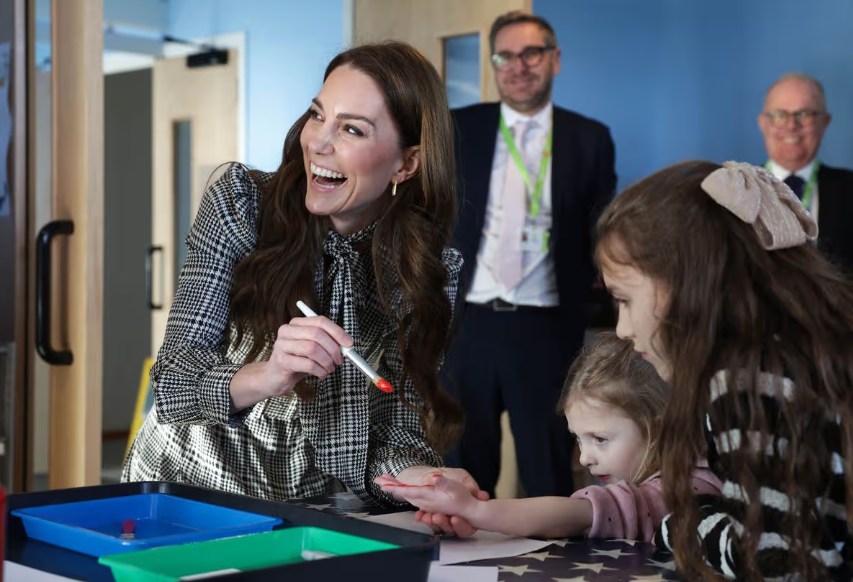
Catherine was very warm and the chat was like a mum to mum. She asked what it’s like when Felix is in Tŷ Hafanhaving respite care and she said: ‘You can do more things with the girls’ and she spoke about how she saw the bigger picture. It was lovely talking to her.
She asked about the painted hand prints on the wall and we told her that all of us apart from Maggie had done them. She turned to Maggie and said: ‘I’m going to do mine later, do you want to do it together?
When Catherine went to do her hand prints we were called in and she painted Maggie’s hand. Lottie wanted to get involved too and Catherine picked up on that, saying to Lottie: ‘Do you want to paint my hand?’ Lottie said yes straightaway. It was a day we’ll never forget.
Eye Gaze Technology and Family Connection
Felix really is our miracle boy, he has defied the odds and now he’s a teenager and into his music and games, it’s amazing.
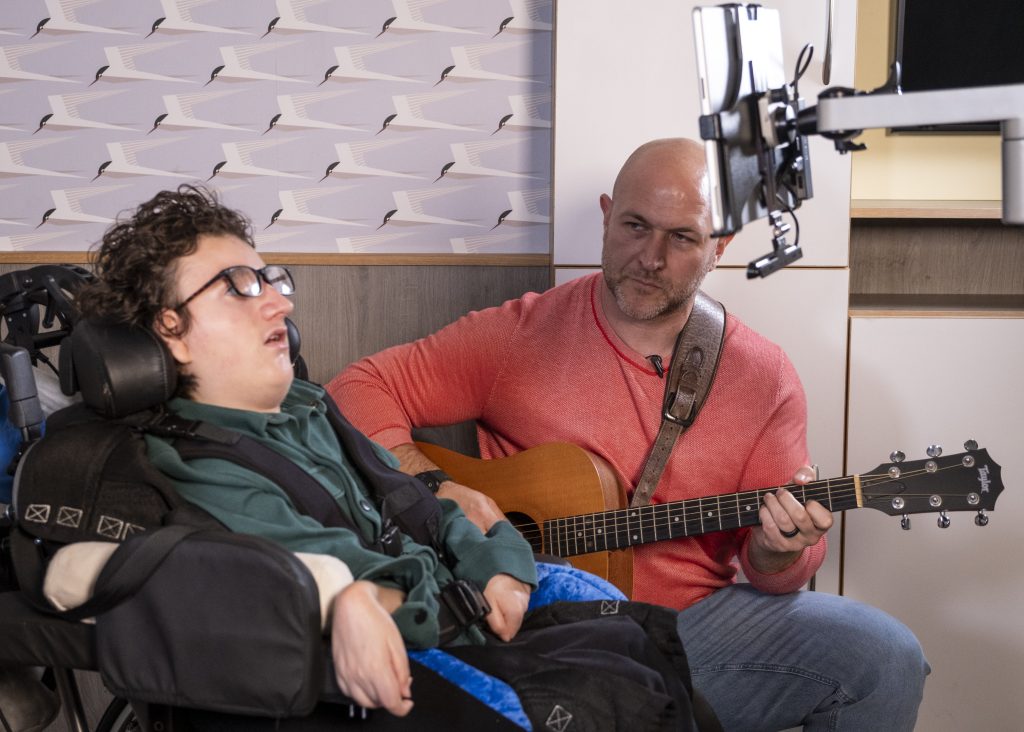
Felix is able to play music on the Eye Gaze with his dad, using his eyes to make the notes while Dan plays along on his own guitar. It gives them both joy. His favourite song is Hero by Foo Fighters.
Lottie is also learning to play an instrument and when Felix is playing the Eye Gaze it feels like normal family time.
Why Assistive Technology in a Children’s Hospice Is Vital
Every day is precious and Lifelites helps Felix connect. The Eye Gaze has given us another level of understanding with him and I know he’s having fun. That’s priceless for us.
When we found out Felix had cognitive ability it opened up a whole new world that we never thought we’d be part of so it makes me sad that other families will never know what their child is capable of if they can’t access the technology. It should be made accessible to more children – it’s vital as it will change everything for those families and those children.”
Amanda Stocks
Similar posts
Through Lifelites 25, Rainbow Hub is transforming lives with assistive technology, helping children with neurological conditions communicate, learn, create and gain independence.
A Goldman Sachs analyst team chose to champion Lifelites, winning second place and Fan Favourite for showcasing how our assistive technology transforms life for children with life-limiting conditions.